
Two Northumbria Police officers who joined the Federation at a recent MP meeting on the Force’s funding said they were grateful for the chance to share their frontline perspectives with decision-makers.
A drop-in session held at Portcullis House in London brought together representatives from various bodies to discuss the financial pressures facing policing in the North East. Attendees included branch chair Nick Munnelly and secretary Neil Watkin, as well as Police Federation of England and Wales (PFEW) acting national deputy chair Paul Crowley.
They met with a group of politicians from across the region, with Kate Osborne, MP for Jarrow and Gateshead East, sponsoring the event and providing the platform for views to be exchanged on an increasingly pressing topic within the profession.
Inspector Emma Dunbar and Sergeant Elliott Richardson were also invited to the session due to their respective roles in Response within Northumberland and neighbourhood policing in Gateshead.
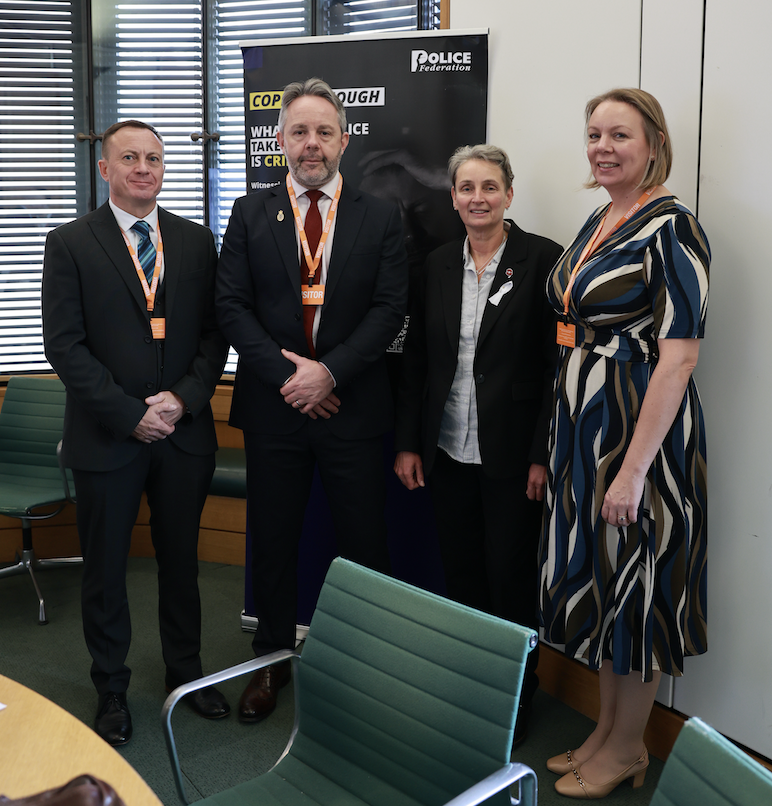
Left to right : Sergeant Elliott Richardson, Nick Munnelly, Kate Osbourne
and Inspector Emma Dunbar
Reflecting on his attendance, Elliott said: “When Nick asked me if I would like to go down for the meeting, I immediately said yes.
“The everyday operational side of policing doesn’t usually get much of a voice at parliamentary level, and when you throw in that I’m from a Force which is stuck up in the North East and doesn’t always get much attention – which arguably links into what the meeting was about – it was a no-brainer for me to attend.
“And just as I imagined it would be, it was very beneficial. Every MP seemed very receptive to us and genuinely engaged in what we were saying. I’m really glad I went, and I think it was productive for both sides.”
Echoing these sentiments, Emma added: “It’s not an opportunity that comes around very often, and there are no better people than us to explain the realities and consequences of underfunding the police.
Resources
“I saw the meeting as a chance for us to talk about the direct impacts of their policies on our jobs, which have such complexity and volume to them that is not matched by our level of resources.
“To be able to tell them how stretched we are I think was worthwhile, and hopefully that will have got them thinking about the changes we need to see.”
Emma went on to explain that while some issues discussed in the session were felt across the country, there was a clear emphasis on highlighting challenges unique to those in the North East.
She said it was questioned how Northumbria, Cleveland and Durham could be expected to serve communities with high levels of deprivation and vulnerability while operating within limitations on the additional funding generated through council tax.
“As an employee of the force with the lowest police precept of any across England and Wales, it was important to me that this was mentioned,” Emma continued.
Custody
“What I did find out was that there is a working group of North East-based MPs who are looking at the precept formulation, and it was good to know there is at least some recognition of the fact it needs to be reformed.
“I was also able to talk about the early prison release scheme and this year’s changes to the Bail Act, which has reduced what is deemed unnecessary remand in custody. Both decisions have resulted in more offenders out on our streets, adding to demand which we are just expected to absorb with no extra resources.”
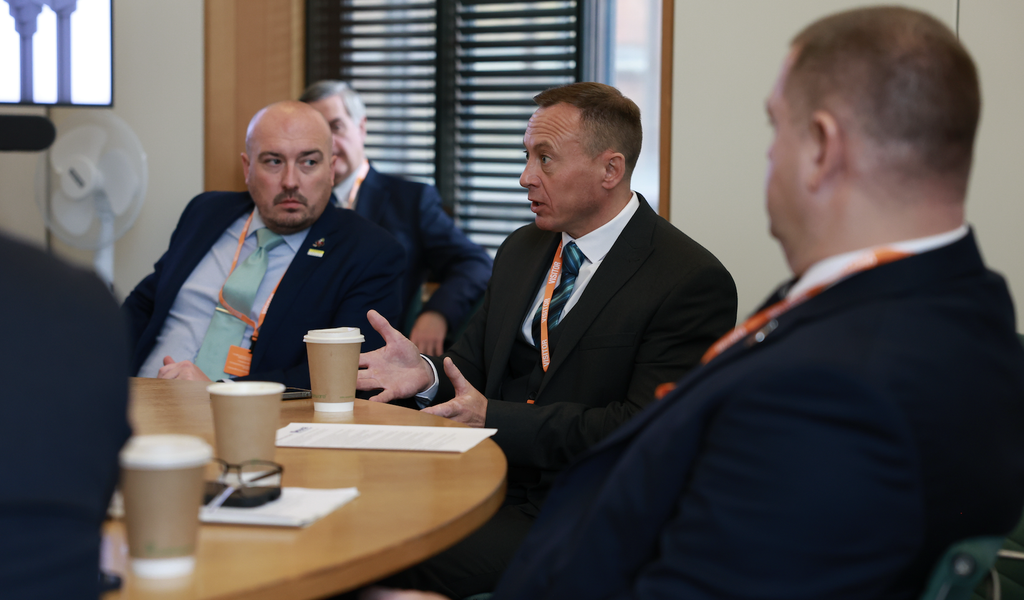
Among the points Elliott made at the meeting was that frontline officers sometimes do not even get the chance to tackle increased demand because they are taken away from their primary duties to plug gaps elsewhere.
In his case, this further weakens the already diminished impact of the neighbourhood team he belongs to.
“It’s becoming increasingly common for us to be dragged away to other departments – response, searches, events and more. It can feel like we are the property of all and sundry in the Force,” Elliott said.
Retention
“I asked multiple MPs for their view on what a neighbourhood officer is. None of their responses matched the reality, and that’s all down to how depleted we are as a workforce. It stops us from fulfilling our roles as they were designed.”
On the subject of officer headcount, Elliott says he told MPs that ambitions to return numbers to pre-austerity levels must be matched by the retention of experience.
“We know our numbers have fallen six per cent between 2010 and 2026, and this needs to be reversed urgently. But policing has changed so much in that time – domestic violence, rape and sexual assault are bigger jobs for us now, and even anti-social behaviour has evolved.
“Recruitment drives are all well and good, but they will only bring in new cops fresh out of the box.
“What I made clear in the meeting was that, if you improve our profession, you need to help existing officers like Emma and I now. Otherwise, morale, motivation and the number of people leaving the Force because they don’t feel supported will only continue going one way.”
READ MORE: Former Fed member nearing finishing line of mental health fundraising mission.